

The garbage problem of our digital age
Plastic is everywhere in our world today: from the cheese packaging in your fridge to the plastic cup at a birthday party, the credit card in your wallet, or the classic plastic bag in the produce aisle.
In our modern world, it's plastics we can hardly do without anymore. The rise of convenience foods and growing online shipping are just two reasons why plastic waste keeps piling up year after year. The result: Over the last 20 years, Germany's annual plastic consumption has doubled.
Each German consumes roughly 38.5 kilograms of plastic waste per year. That's about the weight of our 'Lange' filing cabinet.
We as e-commerce retailers also bear some responsibility, since we use plastics like styrofoam in our furniture packaging. We use it primarily as a protective cushioning material to prevent shipping damage to delicate furniture and reduce returns.
What happens to the plastic waste?
Of the roughly 5.2 million tons of plastic waste generated annually in German households and businesses, only a small fraction is actually recycled: According to the 2019 "Plastic Atlas" published by the Heinrich Böll Foundation and BUND, 60 percent of our waste is "energy recovered," meaning that plastic waste is burned in special facilities.
According to Tagesschau research, the remaining 40 percent is "officially recycled." However, it's important to note that one-third of that is exported abroad and never tracked further. Here's another problem: a large portion of our waste is too contaminated or can't be recycled because it's made of different plastics fused together inseparably. This portion gets sorted out at recycling facilities and burned, so only a fraction of plastic actually gets recycled.
Only about 17 percent of plastic waste generated in Germany is actually recycled.
How is mokebo working toward waste reduction and resource conservation?
As a startup with a young team, waste reduction and sustainability matter deeply to all of us. We see it as our social responsibility to conserve resources, and we're already taking action across different areas to operate as sustainably as possible. For example, most of our returned furniture gets resold. Some of our manufacturers are already working on plastic-free packaging solutions and use renewable energy in furniture production. To learn more about where and how mokebo is committed to sustainability, you can read more here.
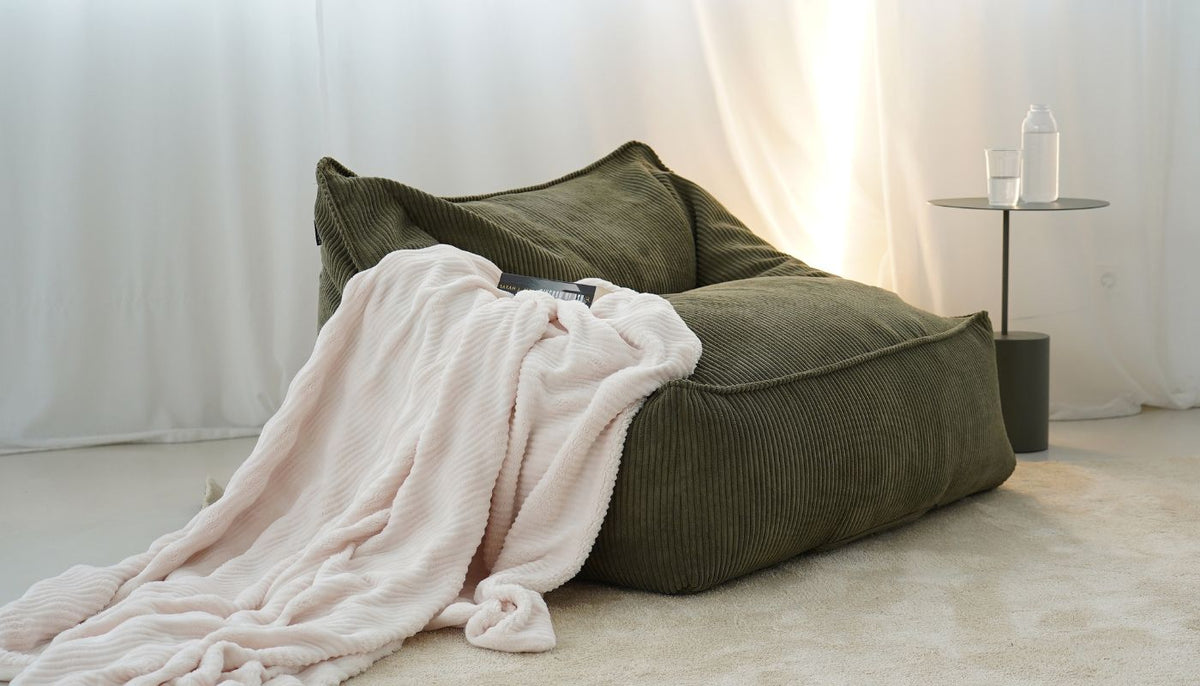
This year we've added a furniture line to our collection that we're especially proud of: our laze recycling beanbags. The fabric of these bean bag chairs is made entirely from recycled PET bottle fibers. In nature, these bottles would take about 450 years to fully break down into microplastics. The filling in our beanbags—EPS pellets manufactured in Germany—is also fully recyclable.
Depending on the product, up to 100 PET bottles were recycled for the cover fabric of a single laze beanbag.
With products like these, we want to make the furniture industry a little more sustainable, one step at a time, and close the resource loop so that as little as possible goes to waste and materials get a new life. But we can't do this alone: so next time you're about to carelessly throw away your plastic waste or toss it in the trash, remember what amazing things it can become—and most importantly: We only have one earth!