




This post was updated on February 08, 2022.
Want to know how our mokebo laze bean bags are made? Then you'll want to read this blog post carefully! On 7,000 square meters of production space, our manufacturer makes the small EPS pellets and the bean bag covers themselves, fills them, and ships them straight to your home! We're taking you on our journey to the Black Forest, the birthplace of all our bean bags. We got to witness the complete production process of our bean bags firsthand and want to give you a glimpse into it:
Step 1: Making the EPS pellets
The first step is creating the heart of our bean bags - the EPS pellet filling. The raw material is EPS granulate made from styrene. By adding pure steam, the small solid spheres originally about 0.3 and 2.5 millimeters in size are expanded up to 50 times their original volume.
After expansion, the pellets are left to rest for about 24 hours so they gain their stability and flexibility. This ensures your bean bag's durability and shape retention down the road. Then the finished pellets are stored in large silos and are ready for filling.
Fun fact: About 800 tons of granulate are expanded here annually. That's enough to fill over 200,000 bean bags!
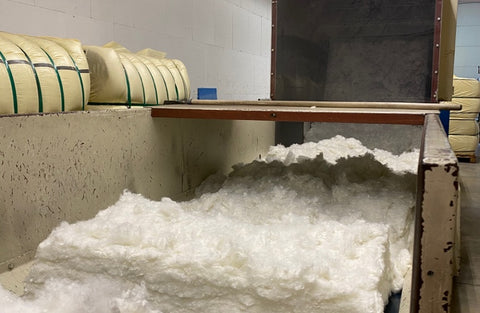
Polyester fiberfill is also made here, by the way. It's a popular alternative to down for filling things like pillows. In a large machine, the batting is teased to keep its fluffy, soft quality. So now you know all about the material and filling process for future mokebo non-bean-bag products too. ;-)


Step 2: Cutting and sewing the fabric
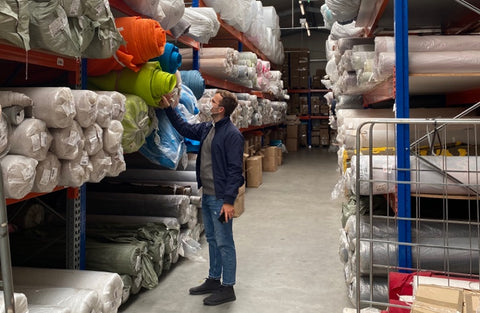
Your bean bag's covers are also made in the Black Forest. Meter-long rolls of various materials are stored at our manufacturer and are cut to size by machine depending on the product type. A cutting machine is used for this, which has various cutting programs installed - for example, the pattern for our 'Sundowners'. When selected, the fabric is pulled step-by-step over a kind of conveyor belt and cut to size using laser technology. Special care is taken to minimize waste and make optimal use of the fabric rolls.
By the way: The total amount of fabric processed & used is about 1,000 kilometers per year!
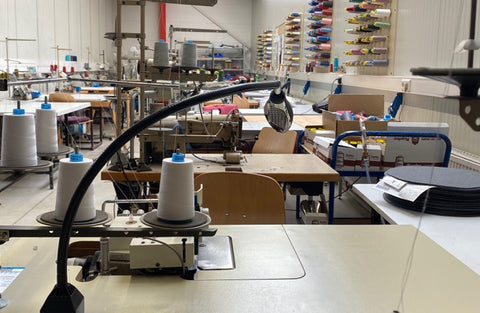
The individual pieces are then hand-sewn together. This is done on one large industrial sewing machine, and there are also many smaller sewing machines where hand-sewing happens if there's a particularly high order volume.


Step 3: Sorting & storage
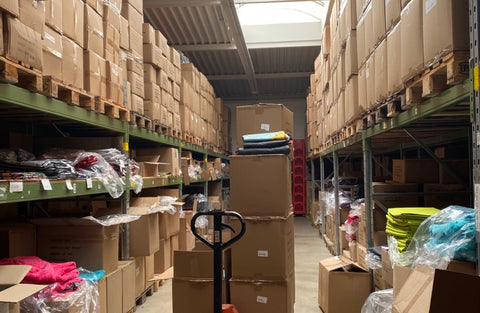
The finished bean bag covers are now sorted in the warehouse into large storage racks by model and color. They're basically just waiting for you to order them! Once your order comes in with us, someone from our production team receives it and puts together a package individually for you. This is then brought to the filling station.

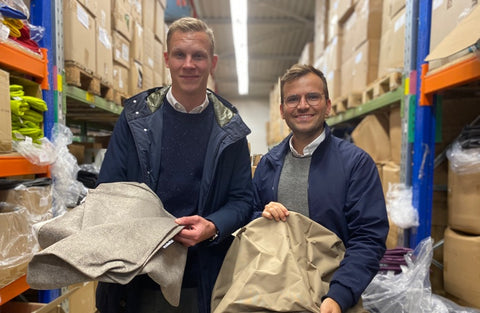
Step 4: Filling the bean bag
Before your bean bag makes its way to you, it gets filled with EPS pellets. The EPS pellets are "sucked out" of the silos where they're stored and hand-filled into each individual bean bag. We even got to pitch in and fill a bean bag ourselves! Once the fill ratio is right, the bean bag is packed, given a shipping label, and sent on its way to you.
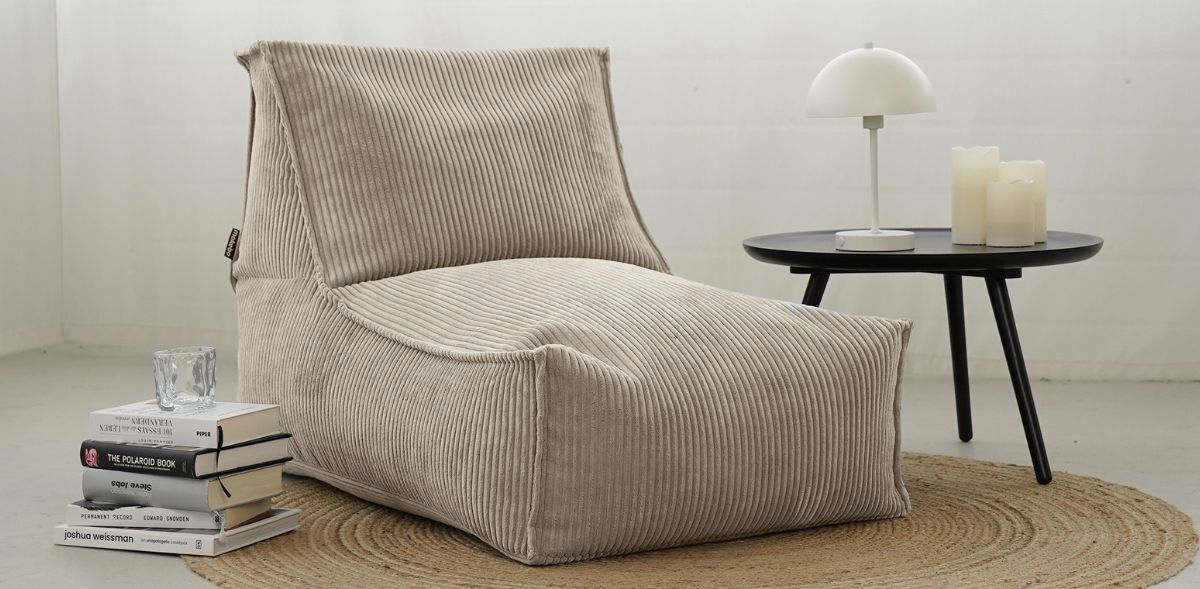
Here's what the finished result looks like. Looks pretty good, doesn't it? Our bean bags from the laze collection combine comfort and design in a whole new way.

What's next?
Stay tuned! We have a lot of exciting things planned for the coming year and can't wait to share them with you soon. Besides visiting our production and warehouse facilities, we've also talked about lots of other projects like new cool bean bag designs, expanded fabric options, and additional colors. So it's quite likely our lazes will be getting some new friends soon - stay tuned!


1 comment
Oliver Kehela
Toller und lesenswerter Artikel von Melissa! Gibt einen sympathischen Einblick in die Wertigkeit eurer Produkte.
Toller und lesenswerter Artikel von Melissa! Gibt einen sympathischen Einblick in die Wertigkeit eurer Produkte.