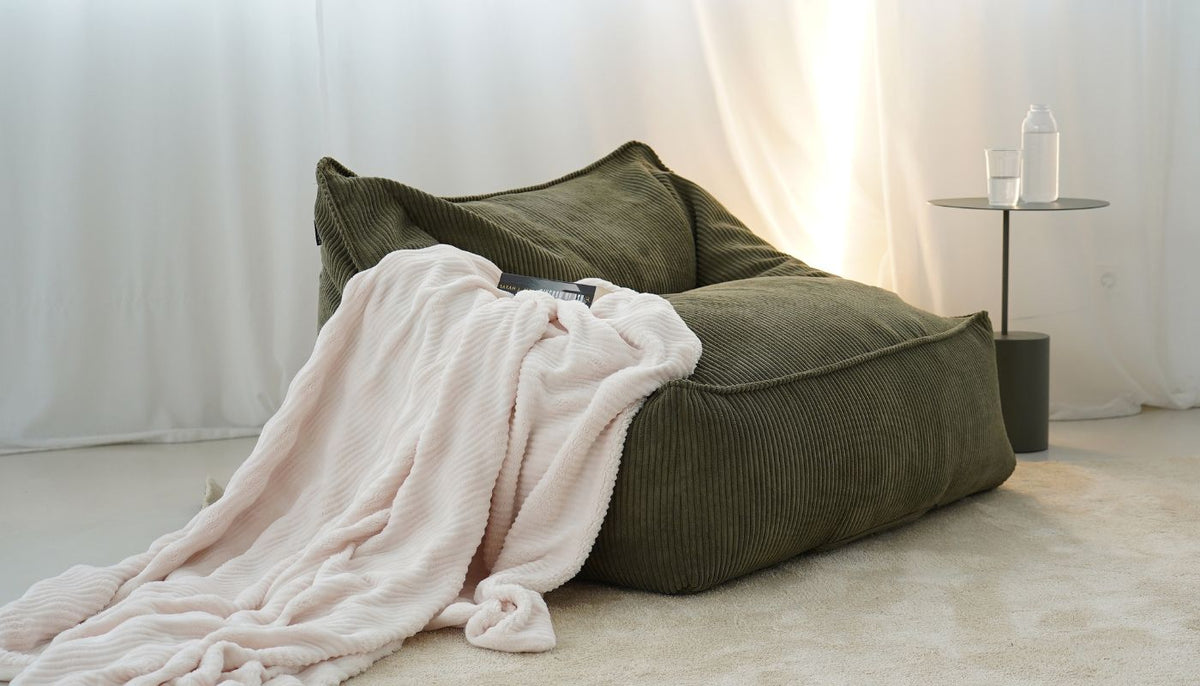



Bean bag chairs look laid-back and stylish – and they're incredibly comfortable too. But the question keeps coming up: Are bean bags good for your back? Or: Is sitting in a bean bag chair healthy? The answer is: Yes, under the right conditions.
To make sure your bean bag is truly back-friendly, you should understand how it works, what to watch for, and who it's best suited for.
Table of contents
- Bean bags and back health – here's what you need to know
- Sitting healthy in a bean bag – how it works
- Pros and cons of bean bags for your health
- Alternatives and smart add-ons to your bean bag
- Conclusion: Healthy sitting with the right bean bag chair
Bean bags and back health – here's what you need to know
A high-quality bean bag is more than just a comfy place to sit – it can support your back health. Thanks to its filling, usually made of EPS beads or polystyrene pellets, it molds to your body shape exactly. This flexible adaptation creates even pressure distribution and supports your spine and discs.
Unlike rigid chairs, a bean bag encourages small, natural movements. This kind of "dynamic sitting" prompts you to shift your posture more often, which relieves muscle tension and prevents stiffness. Your neck and lower back benefit too, since there are no hard edges or backrests pressing into your spine.
In short: Yes, a bean bag can be good for your back – if it encourages movement and provides enough support.

Sitting healthy in a bean bag – how it works
Whether sitting in a bean bag is actually healthy depends mainly on how you use it. Make sure your bean bag is filled enough so you don't sink too deep and the support stays intact. Change your position regularly to avoid one-sided strain, and don't spend hours sitting still in it.
Bean bags work best for relaxation time, reading, watching movies, or creative work. They're not ideal for long office hours – at most, use one as a supplement to an ergonomic office chair.

Who bean bags are right for
A bean bag is ideal for people who like flexible seating, change position often, and don't use it as their only seat. Kids and teens especially benefit from the freedom of movement – it's playful and back-friendly at the same time. Bean bags are less suitable for people with acute or chronic back problems unless those have been cleared by a doctor. If you sit in one position for very long stretches, you're better off choosing furniture with targeted back support.
Pros and cons of bean bags for your health
Pros
-
Molds to your body shape
-
Supports your spine and discs
-
Encourages dynamic sitting and posture changes
-
Relieves neck, shoulders, and back
-
Versatile and easy to use
Cons
-
Can sag with too little fill
-
Long periods of stillness not ideal
-
Harder for some older adults to stand up from

Alternatives and smart add-ons to your bean bag
If you want variety, pair your bean bag with other dynamic seating options. A balance ball or exercise ball trains your sense of balance, an air cushion brings movement to any chair, and an ergonomic office chair is your best bet for long work sessions.
Conclusion: Healthy sitting with the right bean bag chair
A bean bag can be a real treat for your back – when you use it mindfully, change position regularly, and make sure it has plenty of fill.
It's perfect for unwinding, reading, or creative breaks, but it's not a substitute for an ergonomic office chair during extended work sessions.