

Your living room is constantly changing – sometimes friends stop by, sometimes you want to relax and watch a movie alone, sometimes a new piece of furniture arrives, and suddenly your old sofa doesn't fit the concept anymore. That's exactly where modular sofas come in. They can be rearranged, expanded, downsized, and adapted to every life stage. No wonder modular sofas are one of the biggest home trends – and they're not limited to mini-apartments or spacious lofts.
In this article, you'll learn what modular sofas actually are, what advantages and disadvantages they offer, how the individual modules stay connected – and what you should really pay attention to when buying.
Table of contents
- What are modular sofas?
- Are modular sofas good? The main advantages
- Modular sofas for small spaces
- Modular sofas for large rooms
- How are modular sofas connected?
- What are the downsides of modular sofas?
- Why are modular sofas so expensive?
- How long do modular sofas last?
- What to consider when buying
- mokebo's recommendations on modular sofas
What are modular sofas?
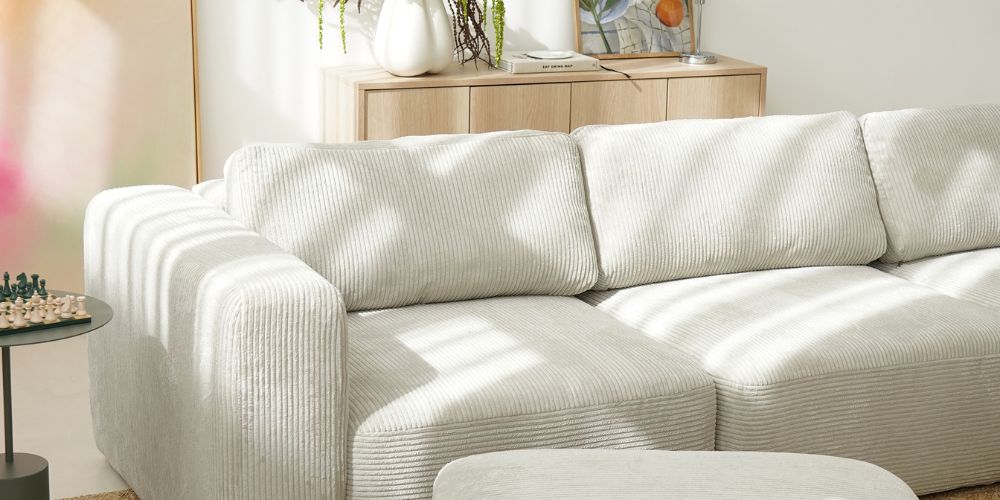
Modular sofas – often called module sofas – are seating furniture made up of individual elements, called modules. These typically include center sections and corner elements, chaise lounges, ottomans, and back cushions that you can mix and match individually. Each module is a standalone element that you can freely connect with the others.
Unlike a traditional sofa that comes in a fixed shape, you build your own modular sofa from scratch – and can rearrange it anytime. A 3-seater becomes a 4-seater quickly with an extra center section, and a chaise lounge transforms your sofa into a cozy lounge corner. When you move, you simply rebuild it in a new arrangement. That flexibility is the core idea behind the concept.
What shapes are available?
The most common configurations are:
- Classic sofa layout – multiple seating modules in a row
- L-shaped sectional – with a chaise lounge or ottoman on one side
- Sofa with chaise lounge – extended seating on one side, perfect for stretching out
- Larger configurations – some systems even allow U-shapes or freestanding sectionals
This makes modular sofas suitable for almost any floor plan – from a single household to a large family.
Are modular sofas good? The main advantages
Short answer: Yes, for most living situations modular sofas are a really smart choice. They combine the best of several worlds – they're adaptable, durable, and usually surprisingly comfortable. But let's look at the details.
Maximum flexibility
The biggest advantage is obvious: you're no longer locked into a fixed shape. L-shaped sectional today, long sofa tomorrow, chaise lounge facing the wall the next day – all possible. Especially practical if you're renting and don't know what your next floor plan will look like.
Furniture that grows with you
Modular sofas are a real investment in the future. When your family grows, your living space expands, or you simply need more seating, you just buy an additional module – instead of replacing the entire sofa. The same works in reverse: if you move to a smaller place, you can sell individual modules.
Practical for moves
Anyone who's tried squeezing a huge XXL sectional through a narrow stairwell knows: it can get really awkward. Modular sofas are much more relaxed in that regard – the individual pieces are smaller, easier to transport, and usually fit through every door without a problem.
Modular sofas for small spaces
Modular sofas for small spaces are actually a smart idea – if you plan correctly. The key point: you don't have to start with a massive sectional. A modular sofa can consist of just two seating modules and take up no more space than a regular two-seater.
Tips for small living rooms
- Start slim: Begin with two or three modules and expand later if you have more space
- Chaise lounge instead of sectional: Saves a row of seating while still providing leg room
- Choose light colors: Make the room feel visually larger
- Keep walls clear: A modular sofa doesn't have to sit against the wall – placing it in the middle of the room often feels airier
A compact modular sofa beats almost any traditional heavyweight: it's more versatile and grows with you.
Modular sofas for large rooms
In large rooms, modular sofas really shine. Configurations are almost unlimited – whether a U-shaped sectional, an island sofa floating in the space, or an extra-long row of seating for movie night.

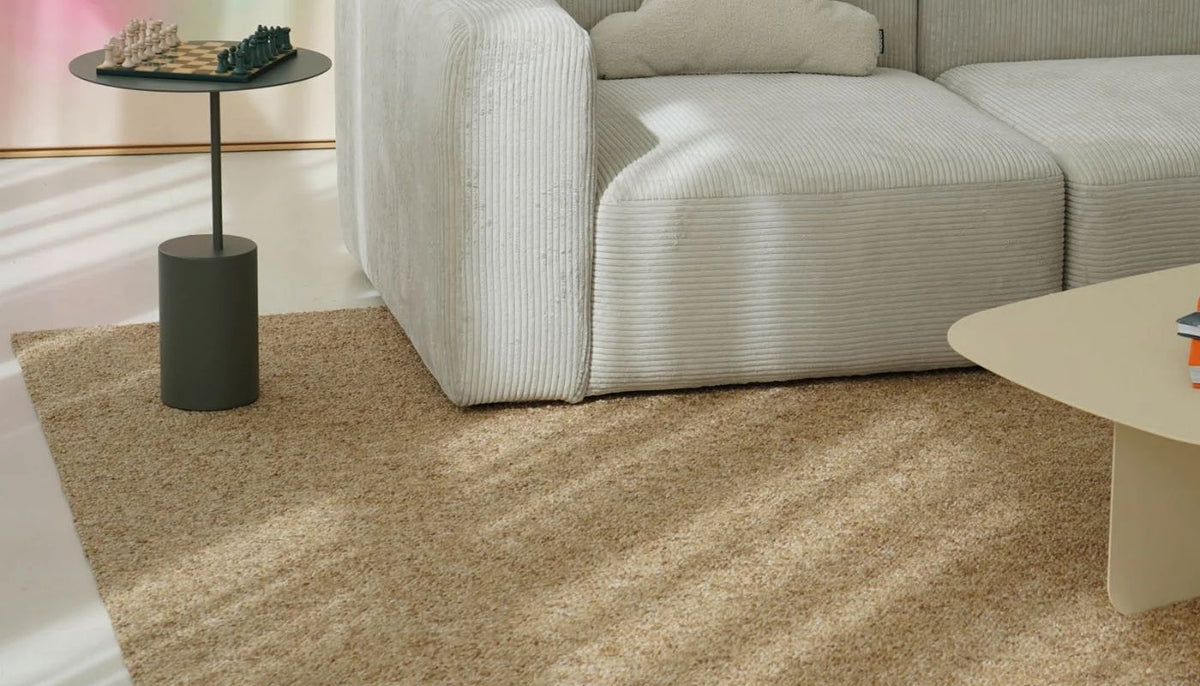
A common mistake in large living rooms: choosing a traditional sofa that gets lost in the space. Modular sofas solve this because you configure exactly the size your room needs – and can expand it anytime. Modular sofas also work wonderfully as room dividers, like separating an open kitchen-living area into a cooking zone and a lounge area. Our modular sofa 'Cubo' is perfect for this: it's upholstered all around, so you can place it freely in the room without an ugly back showing.
How are modular sofas connected?
A fair question – after all, the modules shouldn't slide apart when you sit down. Manufacturers use different connection systems. The most common options:
Metal clamps and clips

This is the classic approach. Metal clamps or hook systems sit on the sides of the modules and you hook them together. Stable, durable, and invisible – and easy to disconnect when you want to rearrange. We at mokebo use metal clamps on our modular sofas because they provide the most stable and long-lasting connection.
Velcro connections
Some models use velcro strips on the underside to secure the modules. The connection isn't as strong as metal clamps, but it's usually enough for everyday use.
Gravity and weight
With particularly heavy modular sofas, manufacturers rely on sheer weight. The modules are so massive that they simply won't shift during normal sitting. It works well – but requires stable floors and plenty of space.
Magnets and connector systems
Modern systems increasingly use magnets or snap connectors hidden inside the modules. Advantage: extremely fast assembly and reconfiguration without tools.
Which option is right for you depends on your use case. If you like to rearrange frequently, a snap system is worth it. If you're planning a permanent setup, classic clamps work great.
What are the downsides of modular sofas?
As versatile as modular sofas are – there are a few things you should realistically consider before buying. The good news: most of the so-called downsides turn out to be advantages when you look closer.
Higher upfront cost – but a lasting investment
Modular sofas typically cost more than a comparable standard sofa. But a well-built modular sofa lasts for many years and handles multiple moves or living situations with ease. Over the lifetime, the extra cost usually pays for itself.
More planning – but more control
With a traditional sofa, you pick a model and place it. With a modular sofa, you think ahead about how many modules you need and what arrangement works. That's a bit more upfront thinking – but it gives you full control over making sure the sofa fits your space perfectly.
Visible seams – but flexibly rearrangeable
You'll always see the transitions between modules a bit. But those very seams are what make the sofa so flexible: you can change the arrangement anytime, rearrange individual pieces, or easily disassemble it for a move.
Why are modular sofas so expensive?
Modular sofas seem pricier than traditional sofas at first glance – and often they are. But there are good reasons.
More complex construction
Each module needs its own frame structure, its own legs, and its own connection system. Where a traditional sofa has one frame, a modular sofa has several. This makes production more involved.
High-quality connection technology
The clamps, connectors, or magnets need to hold up for years and withstand thousands of times sitting down without the modules shifting. Manufacturers rarely cut corners on materials here.
More material overall
Since each module has its own side walls, you generally use more upholstery material, fabric, and wood than in a traditional sofa with the same seating area.
Durability as a promise
Modular sofas are designed as long-term investments. Manufacturers accordingly use solid frames, high-quality foam, and durable upholstery – features that show up in the price.
When you factor in lifespan, the cost quickly makes sense: a modular sofa that lasts ten years and handles two moves can end up cheaper than three budget sofas you dispose of one after another.
How long do modular sofas last?
With good quality and normal use, a modular sofa easily lasts ten to fifteen years – some much longer. Three factors make the difference:
1. The frame
The frame is the skeleton of your sofa. Solid wood – like beech or pine – lasts longest. Stable multi-ply plywood constructions are a good, durable alternative. Pure particleboard frames often weaken after just a few years.
2. The upholstery
High-resilience cold foam with sufficient density (ideally 35 kg/m³ or higher) holds its shape over many years. Cheap upholstery quickly loses its bounce and sags through.
3. The upholstery fabric
Durable upholstery fabric with a high abrasion rating (measured in Martindale cycles) lasts longer. Above 30,000 cycles you're talking standard residential quality; above 50,000 is intensive use.

Maintenance makes a difference
Even with modular sofas: vacuum regularly, treat stains quickly, and don't place your sofa in direct sunlight. That noticeably extends its lifespan.
What to consider when buying
To make sure your modular sofa really works for you, here's a quick checklist before you buy:
- Measure your floor plan and honestly assess how much space the sofa can actually take up
- Match the number of modules to your life situation – better to start small and expand later
- Check the connection system: do you want the sofa to stay put or be flexible to rearrange?
- Try out the seat height and depth – ideally in a showroom
- Match the upholstery fabric to your lifestyle: pets and kids need durable fabrics
- Clarify expandability: will this model still be available in a year?
mokebo's recommendations on modular sofas
If after reading this you're thinking about upgrading your living room with a modular sofa, mokebo has several great options for you.
Our modular sofa 'Cubo' can be configured exactly to your needs. Available are the individual modules center section, corner element, chaise lounge, ottoman and back cushion – so you can build exactly the configuration that fits your space. If you prefer it simpler, choose one of our preconfigured sets: from a 3-seater to a 4-seater or versions with a chaise lounge (left or right) or an extra ottoman. Whether you're single or a family, you'll quickly find the right setup.
An extra bonus for large, open spaces: 'Cubo' is upholstered all around and can float freely in the room – like as an elegant room divider between living and dining areas, without an ugly back spoiling your view.
For even more seating comfort, additional back cushions are worth it: they enhance lounging feel, reading positions, or cozy movie nights and match your sofa perfectly.
Whether you're moving into your first apartment or reimagining your family home – modular sofas give you the freedom to reshape your space again and again. And that's exactly what makes them the future of living.