


You're facing a choice between an sectional sofa and a classic standard sofa and aren't sure which model really fits your living room? You're not alone: millions of people ask themselves this question when furnishing their living room – after all, the sofa is usually the most expensive and longest-lasting piece of furniture in the space. In this guide, you'll get an honest, detailed comparison of both sofa types, plus the most important questions with answers and practical tips for choosing.
Table of contents
- Sectional vs. standard sofa: The difference at a glance
- Sectional sofa: Pros and cons
- Standard sofa: Pros and cons
- Which sofa fits which living room size?
- Sectional or standard sofa: What fits your lifestyle?
- Positioning your sofa: Tips for arranging in your living room
- Material & care: Cord, fabric or leather?
- Frequently asked questions (FAQ)
- Conclusion: How to make the right choice
1. Sectional vs. standard sofa: The difference at a glance
Before we dive into the details, here's a quick summary of the key differences between a sectional sofa (also called sectional couch, L-sofa or living room set) and a standard sofa (2-seater, 3-seater or classic couch):
| Criterion | Sectional sofa | Standard sofa (2-/3-seater) |
|---|---|---|
| Shape | L-shaped with ottoman/chaise | Straight, rectangular shape |
| Seating capacity | Usually 4–6 people | 2–3 people |
| Space requirements | Uses room corners efficiently | Needs open wall space |
| Ideal for | Families, roommates, small to medium rooms | Flexible room layouts, large & small living rooms |
| Lounging comfort | Very high (ottoman for stretching out) | Somewhat limited, mostly for sitting |
| Flexibility | Fixed in the corner | Easy to move & rearrange |
| Room impact | Can feel dominant, but structures the space | Feels lighter and airier |
| Price | Usually somewhat higher (more material) | Often more affordable, pairs well |
In short: A sectional sofa is the space-saving solution with maximum comfort for multiple people, while a standard sofa shines with its compact footprint and flexibility. Which option wins in the end depends on room size, usage habits, and personal style – more on that next.
2. Sectional sofa: Pros and cons

The sectional sofa has become one of the most popular pieces of furniture in living rooms in recent years. No wonder – the L-shape cleverly uses unused room corners and creates more seating in the same footprint than a standard sofa.
Pros of a sectional sofa
- Space-saving & seating-rich at the same time: By using the room corner, a sectional offers more seating and lounging space than two individual sofas on the same floor area.
- Maximum lounging comfort: On the ottoman (chaise), you can stretch your legs comfortably – perfect for cozy movie nights.
- Room divider function: Especially in open-concept layouts, a sectional separates the living area from the dining area without needing a wall.
- Great for families & roommates: Everyone sits on one level – ideal for family nights, gaming sessions or binge-watching with friends.
- Multi-purpose with sleep function: A sectional with sleep function transforms your living room into a guest room in no time – perfect for small apartments without a separate guest room.
Cons of a sectional sofa
- Less flexible: Once placed, a sectional isn't as easy to rearrange as a standard sofa.
- Can feel bulky: With overly thick armrests and backrests, a sectional can make the room feel smaller – slim armrests feel much lighter.
- Delivery: Larger sectionals often need to be delivered in modules – always measure your doors, hallways and stairwell beforehand.
Good to know: mokebo offers a compact 3-seater sectional 'Cubo' with your choice of right or left ottoman – expandable anytime! Perfect if you're not yet sure between a small and large space.
3. Standard sofa: Pros and cons

The classic standard sofa – whether 2-seater, 3-seater or combined as a living room set – is a timeless classic and anything but outdated.
Pros of a standard sofa
- Maximum flexibility: A standard sofa is easy to move, reposition or combine with other seating furniture.
- Fits in almost any room: Whether spacious living room, shared apartment or studio – a compact 2-seater usually fits almost anywhere.
- Elegant, symmetrical room feel: Two sofas facing each other create a classic, welcoming conversation area – ideal for guests and more formal occasions.
- Individually customizable: Different sofa styles or armchairs can be freely mixed and matched, giving your space character.
- Usually more affordable starting price: A single 2-seater sofa is often cheaper to buy than a large sectional.
Cons of a standard sofa
- Fewer seats per square meter: If you host frequently, you'll need multiple sofas or armchairs, which takes up more floor space overall.
- Limited lounging comfort: Space to stretch out is often limited.
- More planning required: When combining multiple sofas and armchairs, you need to think carefully about traffic flow and arrangement.
4. Which sofa fits which living room size?
One of the most common questions when buying a sofa: How many square meters do you need for a sectional? There's no one-size-fits-all answer, but these guidelines help:
-
Small living rooms (up to about 15–18 sq m): Here, compact sectionals (e.g., a 2-seater sectional around 220–250 cm wide) or a space-saving 2-seater standard sofa work best. As a rule of thumb: the sofa should take up about 50–67% of available wall length.

- Medium living rooms (about 18–25 sq m): Both sectionals (240–280 cm wide) and a living room set with 2- and 3-seaters work great here. Your room layout will decide.
- Large living rooms (from about 25 sq m): Here, large sectionals, U-shaped living room sets or two facing standard sofas have enough space to make an impact without feeling overwhelming.
Key measurements for planning:
- Plan for 50–70 cm of seat width per person.
- Between your sofa and coffee table, allow at least 60 cm of space so you have room to move.
- Sectionals are typically 240–300 cm wide and 170–200 cm deep (depending on the ottoman).
- Standard 2-seater sofas usually measure 140–180 cm, 3-seaters around 200–220 cm.
Tip: Measure not just your living room but also your entry door, hallway and stairwell – sectionals are often delivered in modules, which makes transport much easier.
5. Sectional or standard sofa: What fits your lifestyle?
Choosing between a sectional and a standard sofa is ultimately about lifestyle too. Here's a quick breakdown by situation:
- Families with kids: A sectional creates a safe "island" for playing, cuddling and movie nights together – perfect when everyone needs space on one surface.
- Roommates: For movie nights with multiple people, a sectional offers significantly more seating in the same space as several standard sofas.
- Singles & small apartments: A compact standard sofa or small 2-seater sectional with sleep function combines seating comfort and guest bed in one piece.
- Love to rearrange and experiment: A standard sofa – or even two combined 2-seaters – adapts flexibly to new room layouts.
- Frequent hosts: Two facing standard sofas create a classic, inviting seating arrangement – ideal for conversations with larger groups.
- Clarify function first: Should the sofa mainly be for TV watching, serve as a conversation area or structure the space?
- Position a sectional in the room: The L-shape works especially well when you want to incorporate multiple focal points (e.g., fireplace and window front) at the same time.
- Floating or against the wall? In small rooms, a sofa against the wall is usually your best bet, but in open floor plans, a floating sofa can work as a room divider.
- Keep traffic paths clear: Always leave enough space between sofa, coffee table and other furniture for movement.
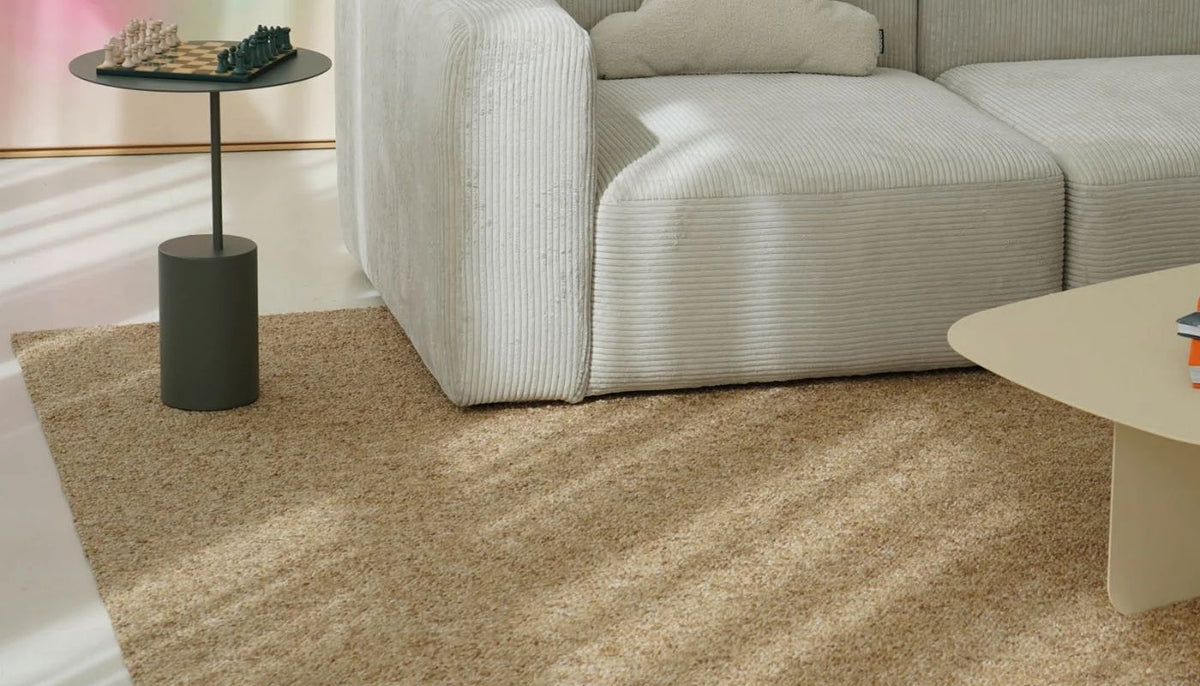
- Use a rug as a connector: A matching rug under or in front of your sofa (for sectionals, ideally extending under the seating section) ties everything together.
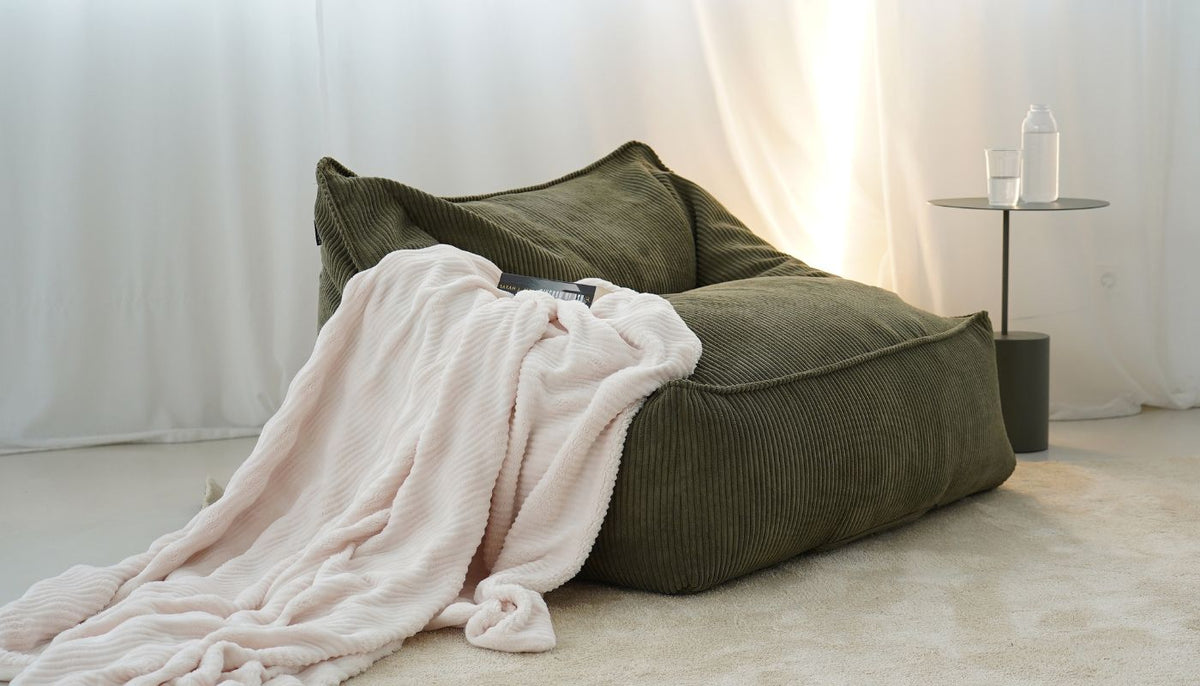
- Cord: Currently one of the hottest trends – soft, durable, low-maintenance and with a distinctive ribbed look. Perfect for anyone who loves a cozy retro vibe. mokebo offers, for example, modular cord sofas 'Cubo' in various modern cord colors.
- Fabric (woven/velour): Pleasant feel, good breathability, wide color range – a versatile choice for most styles. mokebo offers, for example, modular fabric sofas 'Cubo' in various modern fabric colors.
- Leather/faux leather: Particularly durable, easy to clean and elegant, though usually more expensive upfront.
6. Positioning your sofa: Tips for arranging in your living room
No matter which sofa type you choose – the right sofa placement in your living room makes all the difference in how harmonious and spacious the room feels:
7. Material & care: Cord, fabric or leather?
Beyond shape and size, the upholstery fabric plays a big role in your sofa choice:
Care tip: Light sofa colors (beige, cream, gray) make small rooms feel larger, while dark tones (charcoal, dark green) can make a space feel smaller – use them sparingly in small living rooms.
8. Frequently asked questions (FAQ)
What's the difference between a sectional and standard sofa?
A sectional consists of multiple connected sofa sections in an L-shape, offering more seating and lounging space in the same footprint. A standard sofa (2- or 3-seater) is straight-cut, more compact and flexible in placement.
How many square meters do you need for a sectional?
Even small living rooms from about 15 sq m work well with a compact sectional, as long as width and depth match the room. The floor area matters less than the layout and available wall length.
Is a sectional or two standard sofas better?
It depends on how you use the space: A sectional saves space and offers more seating for hanging out together, while two standard sofas provide more flexibility and a classic, symmetrical arrangement for guests.
What's actually the difference between sofa and couch?
Technically, a sofa has two armrests while a couch has one or none. In practice, though, both terms are used interchangeably today.
How large should a sectional be for a living room?
Typical sectionals measure between 240 and 300 cm wide and 170 to 200 cm deep. As a rule of thumb: your sofa should take up about 50–67% of your wall length without blocking doors or traffic paths.
Does a sectional fit in a small living room?
Yes – compact 2-seater sectionals or models with slim armrests use room corners efficiently and keep the center open, which can actually make small spaces feel bigger.
Which sofa shape works best for families?
Sectionals are especially popular with families because all family members can sit and lounge on one connected surface – perfect for movie and game nights together.
How much space should you leave between sofa and coffee table?
Leave at least 60 cm between your sofa and coffee table so you have enough room to move and walk through.
A sectional usually offers more lounging comfort thanks to its ottoman for stretching out. But a well-padded standard sofa can be just as comfortable for sitting – it really comes down to padding quality.
Can you reconfigure a sectional later or switch the side?
With many modern models, you can move the ottoman from right to left (or vice versa) so the sofa adapts to changes in your room layout. Check specifically when buying whether your model has this option.
9. Conclusion: How to make the right choice
There's no universally "better" sofa – only the one that better fits your living room, your daily life and your lifestyle. Measure your space carefully, think about how many people need seating regularly, then choose consciously between the space-saving coziness of a sectional and the flexible elegance of a standard sofa.
Whichever you choose: at mokebo you'll find both options – from compact sectionals to the large modular sectional 'Cubo' to our complete range of sofas & couches for your living room – made in Europe, delivered climate-neutral and at fair prices. And if no model is quite right, you can build your own sofa exactly how you want it with our modular 'Cubo' pieces.
Still unsure? Order free fabric samples and feel the material at home in your own time before you decide.